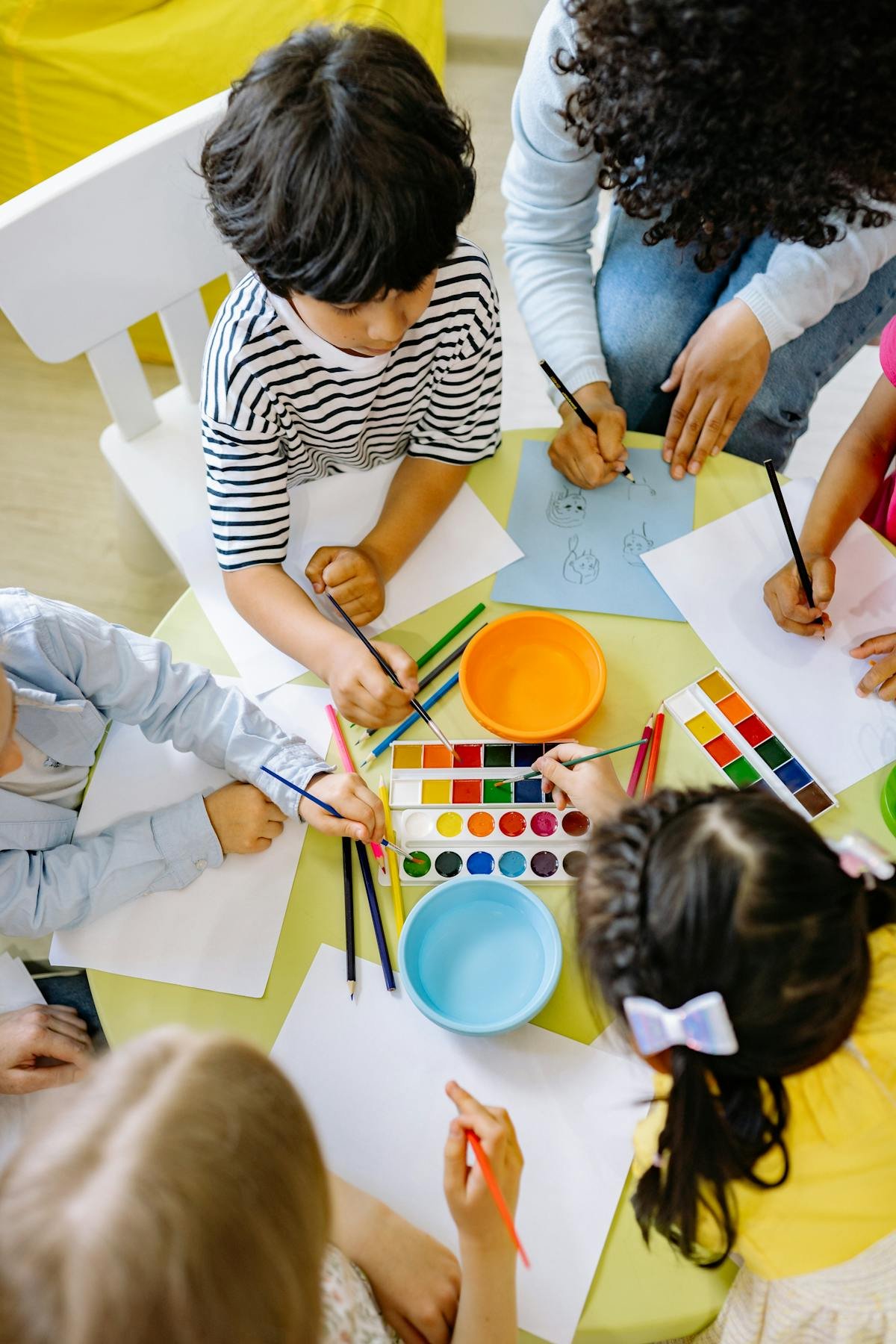
Art therapy is a gentle, safe path into a child’s feelings through colour, shape and material. The child does not need to find the “right words” — brush, clay and paper speak for them. Our job is to read this language together with the child and help them shape what they’re living through into something nameable and bearable.
We combine classic art-therapy frameworks (Winnicott, Edith Kramer) with contemporary work on childhood trauma and emotional regulation. We don’t teach drawing and we don’t grade the work — we create the conditions in which a child gradually becomes the author of their own story.
01Who this is for
Big life events — moving, parental separation, loss, a new sibling
Withdrawal, fears, nightmares, heightened anxiety
Hard to put feelings into words — “I don’t know”, “I forgot”, “I’m fine”
Stress shows up in the body — somatic complaints, tics, repetitive movements
Low self-esteem, fear of mistakes, perfectionism
Child has shut down — not sharing what happens at school or with peers
A child’s drawing often shows what they cannot yet name. Our role is to gently translate that image back into their own voice.
02How we work
We start by getting to know each other: the child explores the room, picks materials, tries different techniques. There is no theme and no homework at this stage. As the child feels safer, spontaneous motifs appear — repeated images, colours, shapes. Those repetitions become the fabric of the work. The therapist doesn’t interpret on the fly — they stay close, mirror, ask soft questions and help the child make their own discovery.
In parallel we work with parents: every 4–6 weeks we meet without the child to discuss what we’re seeing, give practical advice for home and build supports outside of therapy. Without that loop, art therapy works less well.
03Methods
Free drawingthe basic format: child chooses what and how to draw, therapist accompanies.
Clay and modellingtactile material is especially helpful for anxiety and expression difficulties.
Sand traya miniature world in a tray of sand — for working with complex stories.
Collage and imageswhen drawing “your own” feels too exposing, we build from ready images.
Narrative techniquesa drawing plus a story about it — the child becomes the author.
Mindfulness elementsshort breathing and grounding practices to open and close each session.
04What you get
Lower anxiety and emotional tension
Growing ability to name feelings and ask for support
Healthy ways to express anger and sadness emerge
Better sleep and reduced somatic complaints
Child feels more valued and heard
Parents gain practical keys to staying in contact with the child
05What a session looks like
Sessions last 50 minutes. The first 5–10 minutes are a free entry — the child settles, picks materials. The core 30–35 minutes are the creative process; the therapist holds the rhythm and focus. The last 10 minutes are a soft close: we talk about what came up and do simple rituals to step back into ordinary life. Every 4–6 weeks we meet with parents (50 minutes, without the child).
Length and formatBase cycle: 10–12 weekly sessions. Then a short pause and a joint decision on continuing. For acute states (trauma, loss) we may meet 1–2 times a week for the first 4–6 weeks.
☎+994 12 565 60 60
06Frequently asked
My 5-year-old barely talks. Will this work?
Yes. Art therapy is especially well-suited when speech isn’t the main channel yet. The child speaks through the material; we help give it a voice.
Does my child need to be good at drawing?
No. Technique is never graded. What matters is the work itself, not a “pretty” result.
When will we see first changes?
Most parents notice a shift around session 4–6 — the child softens a bit, says a little more about feelings. Deeper change unfolds over 3–6 months.
What if my child refuses to come?
That’s okay. We discuss with you in advance how to introduce it gently — and we postpone if your child isn’t ready.
Book a consultation
Have a question or just want to talk things through as a parent? Reach out — the first conversation is free and comes with no obligation.